Monday, February 20, 2023

February 20, We Know Our Own Lives Expertly: a conversation with Hilary Plum


An account of care, labor, illness, friendship, professionalization, and political struggle, Hole Studies (Fonograf, 2022) explores radical possibilities. Over four essays, Hilary Plum describes resistance and reinvention in our social lives and our aesthetic practice. The work touches on, among many other subjects, Sinéad O’Connor’s 1992 destruction of the Pope’s image on SNL; the corrosive psychology of whiteness; precarity in academic and service work; the rejection of “necropolitics” in struggles for freedom and humanity; the work of teaching; and the author’s own experience of chronic neurological illness. Hole Studies is a gorgeous look at the possibilities of authentic encounter—in art, in protest, and relationships—and it’s one of the richest, most humane books you’ll read this year. Plum is a friend; we recorded this conversation via Zoom between meetings in October 2022, a few days before Hole Studies was published by Fonograf Editions.
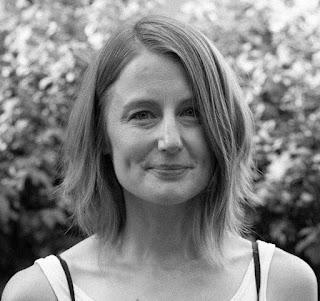
Hilary Plum is the author of several books, including the essay collection Hole Studies (Fonograf Editions, 2022), the novel Strawberry Fields (Fence, 2018), and the work of nonfiction Watchfires (Rescue Press, 2016), which won the GLCA New Writers Award. A collection of poetry, Excisions, is forthcoming from Black Lawrence Press in 2023. She teaches at Cleveland State University and is associate director of the CSU Poetry Center. With Zach Savich she edits the Open Prose Series at Rescue Press. Recent work has appeared in Astra, Granta, American Poetry Review, Fence, Cleveland Review of Books, and elsewhere.

Jay Aquinas Thompson (he/they) is a poet, essayist, and teacher; they're the author of The Resurrection Appearances: a Daybook, forthcoming from Gold Line, and they have recent or forthcoming work in Neon Door, Adroit, Guesthouse, and Poetry Northwest, where they're a contributing editor. A ’21-’22 Best of the Net nominee, they’ve also been awarded grants and fellowships from the Ragdale Foundation, the Community of Writers, and the Sustainable Arts Foundation. They live with their child in Washington state, where they teach creative writing to public school students and incarcerated women.

*

JT: I’ve been reading Fred Moten lately and I wrote down the sentence, “unrestricted sociality as an alternative to academic space.” I’m thinking about how Hole Studies attends to problems of work—the demoralizing, constant precarity; the ruthless, secretive, smiley competition in the academic world; and the sort of devaluation and adjunctification of all different kinds of labor. But the thing in the book that I wanted to begin from, that represents one alternative to that, is friendship. What role do certain conversations, or the kind of ongoing relational tug back and forth of care and ongoingness or abiding trust, play in your process as you write? Do you imagine a particular friend as a reader? Does a particular conversation or relationship persist as a goad when you’re working? Or is your writing something much more solitary than that?


HP: I definitely am always picturing friends when I’m writing. That’s who I’m writing for. I want you to read it, I want Caryl Pagel to read it; there’s always a small number of people who I am thinking about and writing toward, thinking about things that they’ve said and ideas they’ve had. And sometimes I give the piece to those people and respond to their critiques and comments and their further ideas. It’s just a handful of people, and who they are might change a little project by project depending.

And then there are future friends! It doesn’t have to be about whether you would have a personal connection with this thinker. It’s like, your work would be friends.

I love that thought from Moten. But also, sometimes when you’re looking at, I mean, the problems of academia—its restriction of sociality and friendship and its horrible competition and commitment to a really lethal idea of meritocracy, while meanwhile, it’s just being economically hollowed out—it’s funny, because when you step outside of it, you’re like, oh, this happens in other spaces too, small press spaces or poetry community spaces or among activists. All sorts of spaces have similar hierarchical problems. They aren’t formalized in the way that a workplace’s hierarchies are formalized or disciplined, but even in spaces that are more purely social, you can see those same dynamics, where people are competing with each other instead of feeling free or welcome to collaborate or feeling called into the generosity of collaboration. It’s an academia problem that is also a beyond-academia problem.


JT: Given the persistence of that sort of atomized, competitive, economically hollow, lethal asociality pervading so many kinds of communities and so many different forms of experience, can you say a little more about this future friend or a future reader you imagine? Is there something of the aspirational projection which you write about elsewhere in the book, around the experience of participating in a protest? Or is the aspiration more like, May, in the better world, this book find exactly the person it needs?


HP: Yeah. I mean, the best version of it is someone that you admire, whose work you admire, also might find your work useful or want to read it. So maybe that’s the future friend.

But also, even as all of this shit is happening in academia, the work of teaching remains very, very hopeful. Our students are looking for those future readers, and they’re being those readers for each other, and you can be that kind of reader for them, when you try to really be with them in whatever they’re working on, sometimes to a very deep degree. The belief in the future friend is also about feeling hopeful enough to believe in something, in some kind of relationship or possibility that you don’t know about yet. And when you’re teaching something like writing, you’re witnessing that hope in people who want to write. And you’re trying to sustain that hope, which is that their writing is going to be able to do something that they don’t know about yet, or to connect with people who might then become themselves in a new way.

So I think part of it—the part that’s maybe most like attending a protest—is that, like, writing something for your friends or writing something for the people who are immediately around you that you’re in some kind of community with, when it’s in the best sense, is also writing for that possibility, that future whatever, that unknown something. Our friends are the people who make you believe in that, or who make that seem possible. Right? So you’re never just writing for your friends. It’s more that writing for them allows you to together imagine something that’s beyond that, too—that’s larger than that.


JT: This makes me think of a subtle harmony I was aware of in the book: the comparison between the beloved community, unknowable but apprehended in the rebellious sociality of a protest, and the book’s description of a poem as “a past and future land.” You say that, as readers, “we’re not there, but we’re practicing being there.” The spiritual exercises that works of literature demand of us—Fady Joudah telling American readers to repeat the sentence, “the Arab is beautiful”; Peter Dimock urging his readers to “live in the present moment within a frame of redemptive, universal history”—are things that we rarely literally live out. But we still allow ourselves to be recognized by those demands, and perhaps altered in some way. Likewise at the protest, you write that “everyone’s trying to say what they could mean together,” even if it’s imperfect, even if it’s fragile, even if it’s constantly under threat and surveillance.


HP: The thing about protests is that they feel so powerful and important to be at, but they also feel so futile. And, like, you’ve gone to a million of them. The line you quote from the book—“everyone’s trying to say what they could mean together”—is trying to get at the hope that, in another context, or given a little more space, or having seized a little more space or freedom or possibility, we could figure out what the next thing to say was. Right now, everything the protest is saying is reactionary, right? It’s in response to whatever’s happening, to which our reply is a huge no, a sort of gut refusal.

So that means we can’t yet say how everyone would get to talk to each other and be together in this other possible future space. But, at the protest, you’re also practicing toward that right now, right? Like, you are together right now doing something, and listening to each other.

In the book I’m discussing a protest on behalf of Palestinian liberation and against the Israeli assault on Gaza in May 2021. I quote a line by Mahmoud Darwish, in translation, “the land of my poem is green and high.” Darwish’s work and its relationship to the Palestinian liberation struggle gives its own context, obviously, of the poem standing in for the land, but also not being the land: marking the land that’s not there, but also serving as a place for people to be together and for a memory that’s looking toward the future. And that’s something a lot of people have written about, who are not me and are better writers, readers, and scholars of Palestinian literature than I am. In terms of scholarship in English, there’s Jeffrey Sachs’s book called Iterations of Loss, about Darwish particularly and about poetry as the naming of loss. The poem is the land and the land is beautiful and it’s there, and he’s saying, this is where my poem came from and it’s where my poem is when you read it.


JT: The way that you’re threading together questions of glimpsed social possibilities and the aspirations of literature makes me want to come back to the way that you write about form, literary form, in the book. You talk about the dread of being taken as an expert in any content you include; you say something like, Everything I know about this is already in the book. Please don’t treat me as an expert in this topic. And instead, what you assert is that “form is a means to get at the possibilities of form.” So my question is, what possibilities of form, and hence content, did these essays open up for you, either in their own composition, or in the writing you’re doing now that Hole Studies is done?


HP: In US literature, we’re not in a moment that is paying a ton of attention to form. There’s not a lot of discussion or big fights about aesthetics, the kind of fights that have characterized other moments, nor the sense that aesthetics are ideology, nor that people are doing their politics in their aesthetics; it’s more like they’re doing their politics in their content. And in the book I talk about some of my concerns with this disregard for form, and these concerns are familiar critiques of social media, maybe the main place where form is made invisible and content is king: that fighting online is a distraction, and that there’s a kind of hypocrisy that’s easy to perform there, where people can say anything but it’s divorced from their own life. That mode is very performative, and there’s only certain kinds of thinking that you can do in its form, and a lot of kinds of thinking are left out of it, which you might fear are being degraded or excluded by the dominance of these types of media and interaction.

For a lot of literary writers, maybe especially in the essay form, that question of what we’re “expert” in feels really present all the time: you think, OK, I guess I’m an expert in my life, but is that interesting? Actually, I feel largely like I don’t know a lot about my life! What context do I put it in? What are the important features of it to include? Every time you make a choice in relation to that, you are having politics about it. And those are all basically formal questions.

What I got really interested in was—and this is in the book in different places—how people live or experience their jobs, and what they’re able to say about what their job is to them, or what they think it is in the world, or why and how they do it. Which is the thing that you want to know about everyone’s job, but not the thing you can ever make them tell you. It’s a hard thing to find language for. In the book it appears as a fight I was having with law students who didn’t want to connect the legal work that they were learning to do with thoughts people might have about society and the world, which is understandable, but also, you know, seemed very alienating and as though professionalization was a training in alienation or training in not seeing what role your work is playing in society.

This is also something one thinks about as a teacher and editor and publisher: to ask, What am I reproducing? That question shows up in the book’s first essay, “Work, or the Swet Shop Boys,” thinking about the politics of English: what English am I reproducing? What am I enforcing when I become a professional in the language of English, a hegemonic language?


JT: How does this tie back to questions of expertise?


HP: What I was trying to think about in the book was, okay, what thoughts can I have about literature and experiences of literature and music and pop culture detritus that are not going to be expert thoughts, but will still be worth having? Even the book’s thoughts on literature—there’s an essay on the range of literature about the Iraq war, it’s mostly on work written in English, but the essay is not a scholarly project, you couldn’t publish it as scholarship, et cetera. It’s a different thing.

I also write about music that I was listening to, without being someone who really knows anything about music or is very good at listening to it. And there’s YouTube shit: watching without actually knowing a full context—you could take any YouTube clip and build out a context that you could study, so that you would understand better where it was coming from and you could read it better. But in fact, in our life, we’re not doing that. So that’s the kind of reception and thinking that I was interested in. Even for people who have a lot of expertise, and spend a lot of time really trying to think, a lot of your day is not that. You’re receiving all sorts of things and you’re synthesizing them and you’re having a thought about them and you’re living your life and you’re feeling feelings and you’re making connections between the things that you know a lot about and these other things that exist, or that people say to you, or that interrupted you, or surprised you, or whatever.

And so the book was trying to get at that realm of thinking, which I think literature is a good discipline for getting at. It’s the everyday being in the world, a feeling, thinking, responding, relating kind of existence. It can be theorized in a bunch of ways, but we’re not usually theorizing as we do it. You know what I mean? So that was what I was interested in. And the essay form, I think, is a good way of doing that, because you can braid, you can move among subjects, you can do more critical work and more emotional work and more storytelling work, all next to each other. Nothing can reproduce the stream of everyday thought, if that’s what anyone was trying to do, but this kind of essay is closer to that. It’s bringing your different modes of thinking and responding and observing in together rather than having a single, more established form that you’re doing it all in. So I like the essay as a form for that. I like how it can move between something personal and a claim that you’re making about something else, some kind of research you’re doing and also your reaction to it.

My arguments about form, I think, are in particular about the radical possibilities of form. If you can find a form that lets you think in a new way or make new connections, lets you synthesize things that had seemed disparate or at odds, or that can help people understand each other, then that isn’t just an illumination about whatever your subject was, right? It’s an illumination about how it’s possible to do that: to get somewhere new, understand something newly. And so you might be able to continue doing that, continue making discoveries. I think I say in the book, new possibilities of form are a way to get at new content. That is what I was arguing or feeling.

And also there’s something very dignifying and sustaining about thinking that a dumb obsession you had might become a real thought, and actually could connect to something larger—like, the first essay in that book is really just about a hip-hop group that I started listening to at a boring job. And so you think: okay, but could this stray interest in this thing mean something? Can you get it to say something to you? And can you then say something back to it and to the world? And that’s very life-affirming! Or to be like, God, I’ve really watched this one Sinéad O’Connor YouTube five times for no reason, and it’s long, 30 minutes long, why? And then you say, okay, why don’t you just try to say why? And then you’ll find out why, and you’ll also find out something else. If you give it more, it’ll give you more and you can make something together. So I think that a form that takes things seriously, but also tries to open a door with its subjects, is what I was looking for in that book.

Also, I was wanting to write about work, all the jobs that we have—which I think everyone should write about, but they’re probably too tired.


JT: What struck me when I was hearing your response is the way that you use words like dignity and sustenance, because one of the things I found so moving about Hole Studies is the way that it pursues, not authority in any of its subjects that it describes—not that that was anything but an illusion in the world of any essay—but rather a form where unexpected moral truths can break through, fellow feeling can break through, and then maybe we can refuse despair.

And I’m struck too by the way you talk also about certain ugly or racist thoughts. You said, It feels like when I think these thoughts, I’m reproducing something. I could see how I just thought a stereotype, a cultural or social virus, that exists in endless forms outside us and is constantly reproducing itself through us. And I see Hole Studies, perhaps in response to that, scrupulously weighing its conclusions or assertions, testing assumptions, rigorously examining them. So I wonder if you see a connection between the deliberateness and the sensitivity with which the book pursues its conclusions and the horrible infectiousness of certain kind of social contagions.


HP: Yes, the evil of memes! The memeing of evil! One project in my writing is to recognize that things can feel intimate without being in fact individual—to relieve us of the pressures of being an individual. And that means, in terms of thinking a horrible thought, it’s not your thought. You’re a vessel that’s vulnerable to thinking. And that, I think, helps you deal with those thoughts, because instead of shame and hiding, you can witness the thought more accurately and be responsible for it without being caught up. And, like, this isn’t a story about you. It’s a story about that thought and the harm it can do. That recognition seems useful to me and also more accurate.

And I come to this having benefited from the sort of gift that no one wants—having had both a mental illness and a neurological illness. Through those experiences you find that you really can’t actually trust your thoughts. Your thoughts aren’t really reliable. Even having something as common as anorexia, which I had when I was young, 13 to 15 or 16, you know, the thinking of that disorder is yours. Like, you are really, really thinking it; in fact, it’s all that you think about. But it’s also quite common. You’re really shockingly unoriginal; it’s a deeply derivative art. So that in itself was kind of humbling. And I think this is also common: I would never have labeled or understood what I was doing as anorexia; at the point at which I could understand it as anorexia, I was already well into recovering from it, because I hadn’t had that ability to identify it and give it language before that point. And then I was really shocked that something that felt so personal to me—like, it arose directly out of my life, and it was thoughts that I had, that I was thinking about myself and people around me, it was something I was doing day in and day out—was actually common. I was an adolescent. We have a lot of thoughts like that when we’re adolescent, where we’re like, What? Other people are people? But the insight remains with you. And it’s sort of a relief.

I also have a chronic neurological illness, and there’s whole sets of thoughts that come as part of that, as symptoms, and they’re not reliable; you can’t trust them. They’re bad. They’re just bad thoughts. I mean, they both feel bad, and they’re just shitty. You can’t, like, do anything with them. So I think that that’s helpful, because it means that you have a little skepticism toward yourself, and also you have a little mercy, you know what I mean? Someone thinking something isn’t really about them. It’s happening to them, but it’s not about them. It depends what you do with it. I think some of the skepticism and scrupulousness you see in my writing probably arises out of that experience of unreliability or feeling like, OK, if I have a thought, I’ve got to test it, take it for a ride. And also I would say that it feels like an ethical approach, because if you keep giving an account of your thought, and why you’re having it, and why you’re committing to it, and why you’re staying committed to it, that feels more truthful, and like a better basis for relationship with other people, rather than just asserting it.

I can also get into problems of ambivalence—sometimes I have felt like I didn’t say something as fully and crisply as I wish I had, because I was doing that more scrupulating work, you know, or making a lot of space for people who might be coming in a different place. And later I thought, Hilary, you should have just given your opinion, and maybe what you did was a little chickenshit even though you thought it was a good practice. So there are problems like that, too.

But some of those stylistic choices are trying to practice giving an account of who you are, and as much as you can see about why, and how the world shapes your thinking. If you can try to witness your thinking as much as you can, you can at least give an account of it and say, I am thinking this, and I think it’s for reasons like this, I’m going to try to do this with it, for these reasons. The more you can give that meta-account as you’re doing something, maybe the more you can resist certain kinds of pressure and reproduction of rote connections or stereotypes or erasures that exist in the thinking around us. It’s not perfect, but to me, those are practices that would help you offer something.


JT: Yes. It would give you a ground from which a praxis could start, a way of self-understanding that could lead one to a certain kind of action in the world, or to ways of being together.


HP: Yeah. Well said. [laughs]


JT: There’s a Peter Dimock quote, in his novel George Anderson—I thought of this, too, when I was reading your book. He writes, Within structures of complicity, reciprocity must be improvised moment to moment each day. This is made difficult by the pleasures and rewards of benefiting from atrocity.


HP: Yeah! Exactly!


JT: In Dimock’s quote I saw a similar kind of intention to what I see in Hole Studies, to be both morally penetrating and scrupulously self-aware. I think of that refusal to gaslight ourselves that you talk about when you write about the sociology of people seeking abortions. You write, “We know our own lives expertly. We know the forces acting on us.” There is this desire in the book to scrupulously examine one’s own thoughts, but not undermine one’s own sense of authority about one’s own life or one’s own moral commitments, that I find really ennobling.


HP: That’s nice! You should be ennobled! I want people to feel that.


JT: Do you think you changed over the course of thinking through this book, over the course of drafting it, over the course of editing it? Who are you now that Hole Studies is done?


HP:
Yeah, I do think I changed. I feel more confident and more middle-aged. And I spent a lot of time walking around—this was last year when I was turning forty—saying, You’re a forty-year-old English teacher in Cleveland, and feeling OK about whatever romcom that was part of. And one thing that gave me confidence, of course, as I talk about in the book, is that I got a job that supported my work better, and that helps. But I also stopped feeling so insecure about, like, never knowing anything and not having gotten a Ph.D. You know, all of these types of expertise—we all have the thing where we say, well, I didn’t do that, and other people did that, and so other people know more about this than me, because of X or Y. And I did find myself letting go of some of that, and allowing for myself that sort of dignity. You just very nicely described that feeling as ennobling, of having one’s everyday thinking be acknowledged and respected. And then, as with a lot of things, you realize, Oh, that has to include me, because otherwise self-deprecation becomes a kind of self-aggrandizement in that way—if I’m hung up on my own shit, it means I’m treating myself differently.

So I had to just say OK, I need to see what my thinking is and try to do things with it and be responsible for what it is, and not be so caught up about what it isn’t, or what’s not happening, or who I’m not, because otherwise I think you can end up in a more entangled egoistical space.


JT: Throughout the book, the moments of angry and precise assertion are chosen with incredible care, and one that most stuck with me is in “Work,” when you just say, “Our labor isn’t ours. It bears within it others’ work, others’ time, their years of frustration, boredom, achievement, and our own work radiates through the living hours of those we in no other way know.” What I hear in what you just said is a refusal to minimize or eat away at our own intellectuality, or our own expertise in our lives, or our own ability to make connections between the seemingly disparate parts of our lives, as a way to then have something to give to others. If we don’t eat away our own foundations, then we have something to pass on. And if we don’t eat away our foundations, we’re honoring the gifts that we’ve gotten from others’ care, others’ labor, others’ frustration, others’ boredom.


HP: Yeah. In that case I was thinking about medical work particularly, but it’s true of everything, and the pandemic emphasized this, obviously, because we witnessed our connections to and our reliance on each other so starkly.


JT: What books are you reading right now? What’s feeding your brain?


HP: I always feel like I’m not reading anything, which is not accurate. Whenever anyone asks me, I’m like, I can’t read! But I just started rereading a Tana French novel. I’ve been in a real detective fiction hole; in a good way—well, in a bad way and a good way, in part because I read them when I’m not feeling well, and I’ve been not feeling well a lot. So I think I’ve read about thirty detective novels in the past year; I wrote them all down this year, and I thought, That’s pretty solid. But I just restarted a Tana French one that I love, called Broken Harbor. And I’ve been listening to this history of the crime novel. So I’ve been thinking a lot about that genre, and what’s so appealing about it, and what’s so appealing about it to me, and what I want to do with it.

I also just reread Andrea Lawlor’s Paul Takes the Form of a Mortal Girl, which I helped to publish, and I’ve read it I don’t know how many times, but then I reread it and I thought, This is a real banger. Such a fucking good novel. Which I knew the whole time, but it was great to come back and think, It’s even better than I thought. I was an idiot, I thought it was really, really good, but it was really, really, really good.

And I just re-read Adania Shibli’s Minor Detail, which I feel very similarly about: it’s really a perfect novel.

Crime novels, detective novels, are a pretty heavy genre. When you’re reading one, it has a set of expectations, it has tones, it has a lot of history and traditions. It’s like a sonnet, as someone said to me recently; it brings a lot with it, but I love also thinking about what authors do in that space, and what makes them want to be in such a constrained space, where they get to express their artistic offerings through what frictions they have with the form and what they decide to do with those. And it’s a form about the criminal justice system, yet at its best it’s about the failures and the insufficiency of that system. Crime novels are often so much about a place and a time, and they’re about the political and systemic pressures of that place and time—the crime is chosen to express those, right?

I’ve also been reading a lot of students’ writing, and it’s interesting, there’s a trend or tendency at the moment toward a lot of speculative work in their fiction. And that’s not something I’ve done—I’ve done little smidges of speculative fiction, but never a whole book. And I’m realizing, in contrast, wow, I feel so committed to reality right now. So I’ve been trying to think about why that is, and what are the ways that fiction comments on history, or does the work of history and journalism for us, that are so meaningful to me.

You mentioned Peter Dimock, whose work I love and which is part of a vein of more documentary fiction that’s been happening steadily, although not quite exploded into the mainstream. That kind of work is very engaged with reality; it’s doing its fiction very much around archival material or things drawn directly from reportage or history, and it’s often interacting very directly with journalism, which is more like the fiction that I’ve written.

So I’ve been kind of coming back to that same set of ideas, thinking, Given others’ love of the speculative, what is my love of reality? And then enjoying thinking of crime fiction as an in-between. Its genre form means that it feels like a performance: it’s doing a genre. You couldn’t say that it’s exactly realistic, but of course it’s realism. It has to be believable, and it’s supposed to feel like a real time and place, and its violence has a real weight to it.


JT: What do you hope unifies Hole Studies?


HP: Some of the things we talked about: feeling dignified and empowered in the ways that we think, and decentering authority from some of its usual shit-hole fortresses, recognizing authority in the spaces where it’s happening, and cultivating receptivity instead, other modes of response. I think that is the theme throughout the book. The first essay ends in watching Riz Ahmed appear in different settings across mainstream media, and the kind of opportunities that he seems to generously create for people there, which they mostly don’t take him up on. But there’s still the invitation: if you can recognize when someone’s doing that, you can try to respond; there’s a lot of potentiality and potency in moments like that. And art is a space like that—I mean, when it’s good, someone is generously making a potential space for future togetherness. But you in the audience have to do the next thing, right?

So I think the theme of the book is about that: recognizing those moments of possibility or potential and then feeling empowered to receive them and respond to them, even though you might just be a person.

It’s a book that also helped me think more about teaching, and so maybe it can do that for other people, but I don’t know.


JT: The way you describe the hope of the writing workshop as a “nice space” is another sounding of the moral theme of the book. You write, “I, too, am someone. This is how I tried it. This is how it worked out, in case that is useful to know,” and then, “Please use what I’m trying to say to say something you want to say.” I think that’s another sounding of that theme of shared labor and the dignity of our knowledge, or the dignity that we can give to our experience by taking it seriously.


HP: I hope so! I do like to use that phrase (and I write about this in the book), when teaching a workshop for example, to say that I am just trying to make a nice space—that’s the sentence that bubbles up in me and I’ve decided to stick with it. That phrase, “make a nice space,” seems kind of humble, pathetic, maybe misguided, next to academic course objectives and, like, aesthetic aims. But I like that about it, I like using a phrase that’s a little embarrassing and declines some forms of expert status, as we’ve talked about. I like that it doesn’t make an argument about what good writing is and who might be doing it and who will be the judge—it makes an argument instead about good experiences and good processes. So it’s not about what I, the teacher, will deliver as an authority, it’s about what we all will need to offer each other. It is very hard to make a space that feels nice to everyone in it, since people are very different and they are often in that same space for different reasons, looking for different outcomes. Ideally, niceness doesn’t deny or suppress difference, it makes space for it, while refusing hierarchies. So you have to keep observing, asking, checking in, calibrating, turning agency over to others but also guiding when it is useful, always attending.

I’m not saying other people need to use this phrase—to make a nice space—especially since it is kind of banal, but I think teachers can find tools or guidelines that work for them and help them counter the tendencies toward hierarchy that swell up inside us or that roam any room, making these insidious dynamics that are exclusionary and unjust, not open. So that phrase (whatever anyone’s phrase is and feel free to use mine if you like it) is meant to be a kind of touchstone to help you recognize when hierarchy is getting going and think, that’s not so nice. So you’ll get in there and tend that space.

Part of that approach, and this is what the quotes you mention are getting that, is that I as the teacher can try to offer my own experience to the room, and maybe it’s useful to think of that as experience not expertise. You can say, I did it like this, it went like that, in case that’s useful to know. But that mode of teaching or talking is more participatory—it means you’re doing less of the teaching thing where you impart knowledge and perform authority, and more of the teaching thing where you help students identify their questions, build a methodology and mode of approach—this is true of creative writing, too—and then reflect on their own processes and the work that resulted and the feedback they got. This is harder for everyone, especially because students often want clear definitive answers to their questions, not more questions, or an invitation to answer their question themselves—we all want to just receive sometimes and not be made responsible, especially if we’re not sure yet if we have the skills we need. And teachers also like to answer questions because it feels good and we want structure so that we’re not wandering too vaguely or idiosyncratically, or falling into the trap Dimock outlines, where an improvisatory practice that’s meant to build reciprocity—like conversation, like workshop—slides into complicity instead. But I think this is still the right less/more balance to try for. And after some years in teaching, I feel I still have a lot to learn and want to keep learning—and it’s hard even to want to keep learning! This is what is so admirable about the work of people being students—but I can say that the feeling of a nice space and good process is something I know students value, I’ve seen them value it and use it and try to offer it to each other.

Sunday, December 25, 2022

Dec 25: Merry Christmas & an Invitation to Send Us Your Reading Recs


Merry Christmas!

*

Merry Christmas and happy holidays to you and yours. Thanks for reading this year's Advent Calendar, all of which you can now find collected here. We'll take a break now for a bit, but invite you to tell us what you loved reading this year, essay-wise. 

Either fill out the Recommended Reading google form here or send us an email with your recommendations. Anything essay or essayistic that you got into this year is fair game. Doesn't have to have been published this year, but bonus points if it was. We'll run a digest post with all of our riffs and recommendations in early 2023, so get us yours by the end of the year.

—Ander & Will

*


Saturday, December 24, 2022

Advent 2022, Dec 24, Dave Griffith, Station X: Christmas Eve, Strawtowne Pike, Bunker Hill, IN


Station X: Christmas Eve, Strawtowne Pike
Dave Griffith

*

Author’s note: “Station X” is part of a 14-part collaborative text and audio project between myself and printmaker and musician, Kyle Peets, that reflects upon daily life during the early days of the COVID-19 pandemic. Though the project is not explicitly religious, it does borrow the narrative structure from the popular Lenten ritual the Stations of the Cross or Way of the Cross, in which pilgrims reenact the Passion of Jesus Christ by processing and praying before tableaux depicting different moments from that story.

The text and accompanying ambient music were composed independently of one another during the pandemic at a distance of over 2,000 miles—me in Indiana and Kyle in Oregon. Kyle did not have access to the text I was writing while he composed, and I did not have access to the music he was composing while writing. This was to ensure that any synchronicities would be accidental.

We suggest reading the piece, then listening to the recording.

*

That was at the new house.

At the old house on Stratowne Pike, the house my grandparents and my two aunts moved into when my grandfather was diagnosed with cancer, we would walk out past the barn, across the barren field toward a dark windbreak. It was farther than it looked, and colder out there in the middle of the field than it was close to the house, and so we always bundled ourselves in hats and scarves before beginning the walk out to the wood.

My dad would carry my brother on his shoulders at least part of the way. My uncles would be carrying cans of beer, which they plucked from the case cooling on the back porch. Out there in the woods there wasn’t much to see, really, except some rusted farm equipment, old beer cans, maybe a whiskey bottle. On the walk, my dad had a knack for finding arrowheads just sitting on top of a furrow, turned up when the field was plowed under.

This is the house where we gathered for many Christmases and Thanksgivings, where we would play heated games of Trivial Pursuit and Pictionary, and then stay up late giving dramatic readings from the Collected Poems of James Whitcomb Riley, the so-called Hoosier Poet, whose 1885 poem “Little Orphant Annie” inspired the creation, years later, of the comic strip.
Little Orphant Annie's come to our house to stay,
An' wash the cups an' saucers up, an' brush the crumbs away,
An' shoo the chickens off the porch, an' dust the hearth, an' sweep,
An' make the fire, an' bake the bread, an' earn her board-an'-keep;
An' all us other childern, when the supper things is done,
We set around the kitchen fire an' has the mostest fun
A-list'nin' to the witch-tales 'at Annie tells about,
An' the Gobble-uns 'at gits you
      Ef you
          Don't
               Watch
                     Out!
In my memory, the poem took the place of “‘Twas the Night Before Christmas” in our Christmas Eve ritual.

But that house is gone now. Four years ago, a tornado blew through the county and came near enough to nudge the house off its foundation. House inspectors came and judged that it was no longer a safe place to live, so it was condemned and razed. All that is left is the gravel drive with its strip of grass and weeds down the middle, and a faint outline of where the foundation had been.

Sometimes when I am driving back from Indianapolis, after a weekend with my kids, I make a quick detour off route 31 and visit the empty lot, remembering the feeling of anticipation I felt as the house came into sight; how the dogs would begin to bark and rush out to our van to greet us, followed by my uncles who would come out to ask if they could help carry luggage; how I would hug them, or, as I got older, shake hands; how as we all walked into the house my uncles would grab beers from cases chilling on the porch, and, later, as I got older, I would grab one, too.

In the Google satellite images, images taken from the USDA’s Farm Service Agency map data, the shape of the gravel drive is still clearly visible; the way that it ran parallel to the north side of the house and then made a loop around the garage and then met back up with the drive again. When you zoom in to several hundred feet from the ground it looks like the looped rope of a snare.

But when you drag the small icon of a person over the old gray asphalt, it glows blue, meaning that a Google car has driven past. I drag the little orange person over the green fields, my cursor holding them by one arm, their legs dangling and swinging with the sudden motion, like someone being carried away by a clutch of balloons, and drop them on the blue road in front of the driveway. It is then that the house appears. There it is: the white gable of the roof is peeking from behind a line of trees in full leaf. Orange daylilies flank the entrance to the drive.

According to the timestamp at the bottom of the screen, it is June of 2009. It is a glorious day. The sky is a wash of light blue at the horizon that grows more and more intense and saturated with elevation. Among the white puffs of clouds it is deep robin’s egg, and with a dragging of the mouse upward I can see that the sun is white and blurry at its nadir and beyond the sun it is Marian.

It must be early June because the corn in the adjacent fields has just emerged, several inches high.

If I close my eyes, I can feel the heat of that sun and smell the odor of those lilies.

A few seconds of meditation and I am there walking that drive way; the noise of my shoes on the gravel like a needle traveling the groove of a record.

*
Dave Griffith is the author of A Good War is Hard to Find: The Art of Violence in America (Soft Skull Press). His essays and reviews have appeared in print and online at the Paris Review, The Normal School, Another Chicago Magazine, The Los Angeles Review of Books, the Utne Reader, Killing the Buddha, and Image, among others.

Kyle Peets is a multi-disciplinary artist and educator who has exhibited his work nationally and abroad. He has had solo exhibitions at Platte Forum gallery (Denver, CO) as well as various group exhibitions: Character Profile at Root Division gallery (San Francisco, CA), Art Is Our Last Hope at The Phoenix Art Museum (Phoenix, AZ), and Art Shanty on the frozen White Bear Lake (Minneapolis, MN). His work has been published in the periodical SPRTS by Endless Editions (New York, NY), and is archived in the Watson Library Special Collections, The Metropolitan Museum of Art, and MoMA Manhattan. He received his MFA in Printmaking from the University of Iowa and a graduate certificate in Book Arts from the Iowa Center For The Book.

Friday, December 23, 2022

Advent 2022, Dec 23, Jenny Spinner, Um Aidan


Um Aidan
Jenny Spinner

*
—Amman, Jordan, December 2022

I remember that iris, a dome of florets now more gray than blue, not solid but patterned, with bits of white breaking through the way light spills from the bottom slit of a closed door. Back then, we spent hours holding each other’s gaze, locked in study and reassurance: I’m here. You’re here. Once, while changing him in an airport bathroom—he was about six months old—a woman leaned in, interrupting us. She put a wrinkled hand on my arm, and said, “I remember that, too. Don’t blink.”

But I did blink, inevitably, and now he’s more man than boy, elbows propped on an aluminum-topped table, sweatshirt sleeves pushed back, popping small balls of falafel into his mouth. He brought me here because he knew I’d love it—your kind of food, Mom—and I realize he finally knows me the way I know my own mother. Which means he knows only what he can bear to know. We’re at a hole-in-the-wall falafel joint tucked into a covered alley off a busy street in Wasat al-Balad. He orders foul and hummus and mouttabal. Someone slaps two round discs of bread on the table. There’s no menu, but my firstborn knows what he’s doing.

In the last few days, we’ve shared more words than we have since he was a child. He tells me about his visit to Palestine, the differences between Moroccan and Iraqi dialects, the Circassians who guard the royal family, and that time he inadvertently walked into the quiet room in the library and forty pairs of eyes lifted to stare at him, not hostile, just looking. When the man at the market across from the university gate asks why he is studying Arabic, he says “because I love the culture” not “politics.” He leads me inside: When the fruit comes out, it’s time to leave. Women sit in the back of the cab, not the front. We talk about the crazy traffic in Amman and the constant honking, and then he remembers that time he drove home to Philadelphia from the shore and a violent thunderstorm flooded the roads and he couldn’t see at all and he was terrified. He’d only had his license for six weeks, and he didn’t want to be in charge anymore. He wanted to give it all back, but he couldn’t, so he pulled into a mall parking lot to wait it out, only to have an unsympathetic guard insist he keep moving. It’s happened to him twice, he tells me, when he’s been on the road and it’s so dangerous that he can’t see and the only thing he can do is white-knuckle the wheel and makes all sorts of promises to himself and to God if only he survives. You know that feeling? he asks me.

Just that morning, after the latest test results arrived in my inbox—the doctor can’t reach me here but the tests can—I’d sunk into a heap on the chair in the corner of my hotel room. The doom in my stomach rose to my throat, and I swallowed hard, trying to breathe. By the time we met up later in the day, I had decided I wasn’t going to tell him, but then I did, a little, enough. His eyes met mine for about five seconds too long. Those eyes. I’m here. You’re here. I’m still here.

Sometimes it’s hard to reconcile this man of mine with the boy who was so shy as a child that he couldn’t look anyone in the eye. At his first soccer game, when he was five, he sat on the sidelines and cried because he was too afraid. For so long, he clung to me like a shadow. But now, here he is, leading me all over this city, ordering my tea, hailing cabs, rifling through my wallet for the right bills, shooing off hagglers, translating for his host family. When we cross the street, I tuck into his side, watching not the traffic but his feet. When he moves, I move.

But I’m always a step behind these days, anxiety saddled to my waist, weighing me down as I try to keep up. At home, in the old life, I am the professor. Here I am the student. More than that, here I am Um Aidan. We’re climbing the steep road near his house as the sun sets in a pink splendor over the sandstone buildings dotting the hill. He’s telling me about Naji al-Ali’s Handala and the men who run coffee out to your car on silver trays and the dried miramia leaves his host mother will crumble into my tea, promising to cure me of any ails. Keep going, I want to say, my voice cracking with love and pride as he strides ahead with a confidence I’ve never had. My boy. Keep going and do not look back.


*
Jenny Spinner is a professor of English at Saint Joseph’s University in Philadelphia where she teaches creative nonfiction and journalism. She received her MA and PhD in English from the University of Connecticut and her MFA in Nonfiction Writing from Penn State University. She is the author of Of Women and the Essay: An Anthology from 1600 to 2000 (U of Georgia P, 2018).

Thursday, December 22, 2022

Advent 2022, Dec 22, Ander Monson on the Pleasures of a Book all about Road House


Pain Might Actually Hurt?:
on Sean T. Collins's Pain Don't Hurt

Ander Monson

*

1. On the spectrum of bad ideas for books, watching the Patrick Swayze movie Road House repeatedly and writing an essay a day about it for a whole year, 365 days straight, has to rank pretty high. My friend Sean (not T. Collins) once went to his parents’ cabin when they weren’t there, he told me, and took one of every pill he found just to see what would happen. That was not a good idea, but it's one with a relatively limited half-life, unless they were into some really weird shit. I remember he said he just got bad diarrhea, which is about as positive as an outcome as one could imagine. But an essay a day—for a year—about Road House is a lot.

2. To be fair I recently watched another movie 146 times and wrote a book about it, so I know what I’m talking about when I tell you this isn’t a great idea. I did write about Predator every day for a year, but I didn’t write an essay a day. I suppose, in retrospect, I could have.

3. I also haven’t, to tell the truth, yet finished the Road House book, which is Pain Don’t Hurt by Sean T. Collins: As of this writing I’m only on essay 121. It’s not a book you can just blow through, unlike Road House the movie which is very easy to blow through, though I have watched it, as of right now, in the middle of this sentence where I am meeting you, exactly once. I’m not quite sure how I missed it, having watched pretty much every other action movie of the 80s a lot, often on repeat. But I realized while writing Predator that of all the 80s action movies I’d never actually seen Road House, and neither had my wife. So we watched it last year.

4. It's a lot! It makes so many kinds of sense that it makes none. Road House is not a consistent piece of art except in its inconsistency. It’s a light, weird action movie that coasts along on a truly bizarre premise and the irresistible hotness of Patrick Swayze but by the end turns for no real reason into a brutal murderfest. The tone of the movie veers wildly and unexpectedly from wacky sexy zen to dark af for no reason I could discern. Little of the plot makes any sense, starting with its initial premise in which there is a world where you might hope to attract and pay nationally-known celebrity bouncers six figures (in 1980s money!) to clean up your shitty local bar. Things devolve from there. Few of the movie’s lines of dialogue hold together when you look at them for more than a few seconds (which Collins directs our attention to many times, for instance the classic line "Does a hobbyhorse have a wooden dick?," uttered in the mode of a question like "Is the Pope Catholic," yet the answer, very obviously, is no; stuff like this happens a lot in the movie). If you would like a smart writer riffing on—not just bagging on—a kind of dumb movie, then you'll like this book a lot.

5. What drives any of us to our subjects? I watched it, thought it fun and forgettable, and filed it away. For Sean T. Collins, however, it became an animating force. A whetstone for the mind. An idea that was so crazy it just might work.

6. It does work. It works great. 

7. So you actually don’t have to buy Pain Don’t Hurt to read the essays, but you should if you can find a copy. It goes in and out of print, I guess, maybe because all 365 essays are available on his website under the tag ROADHOUSE. The blog versions have one major advantage, which is that they include screenshots from the movie to illustrate his points. This is useful if you haven’t seen the movie at all, or, like me only once, or can’t call to mind all the minor and often throwaway characters in the film, nearly every one of whom gets a deep treatment, or just don’t want to rewatch the movie to refresh yourself of all of its nuances.

8. The primary disadvantage of reading them onscreen is that the project really is a book; it reads better that way, as something you can hold in your lap and that has all the authority of bookness to it and all of the weird uneven sexiness of Road House. This is a source of great friction between the authority of the artifact and the dumb idea and subject matter of the book.

9.There are a lot of good introductions to Road House and why anyone might care about Road House in this book, but my favorite so far is in 107, “Dalton’s Back,” a tight little essay about just that, the spectacle of Dalton’s sexy back:

Road House, when appreciated properly, is less a film than an ecosystem: hyper-efficient, factory made late-‘80s star vehicle; barely competent, incoherent MST3K fodder; rock-solid action flick; obvious, excessive homoerotica; smarter than it looks; dumber than it realizes; a Ben Gazzara film; a Terry Funk film. When you watch Dalton’s flawless, godlike arms, traps and shoulder blades flex and contract in harmony, you’re watching the character and the movie in metonymy. You’re watching a real physical thing—Patrick Swayze’s beautiful, beautiful body—do what Patrick Swayze’s character and Patrick Swayze’s movie are also doing. As below, so above.

10. The movement here is obviously the real show. And like many iterative projects over a sustained period of time, the life of the writer often sweeps into the project in big and obvious ways, as it does in 53, “Why We Fight,” which is also another great introduction to ways of experiencing Road House:

'This has been, without question, one of the worst weeks of my life, but one man offers succor.’” / I tweeted this as I sat down to write today’s Road House essay. I knew exactly what I was going to write about: I knew the scene, knew the moment, knew the angle, knew how to flesh it out. It’s one of the ideas that made me want to start this whole project in the first place. It wasn’t until I began writing that I realized the thing I posted on Twitter before writing today’s Road House essay is today’s Road House essay. / I’m not going to talk about the week I’ve had, or why it’s been so bad, bad enough that as I type this I am home along with my stepson instead of out with my partner and our friends because we were supposed to go to an all-sad-songs karaoke party together and I am too sad for Sad Song Karaoke. It’s not really my story to tell anyway. I’ll tell you what is, though: Road House.

11. This is the value of writing about Road House in this way. It becomes your subject. It becomes your only subject, and the subject you will always have, whatever else happens. You will always have your bad idea, your self, and your Road House.

12. Have I ever been to an actual road house? I’m not sure. None come to mind. I’ve been to plenty of dive bars, and a lot of non-dive-bars and some not-quite-dive bars, many of which are in houses that have been located on roads, and I’ve been to some chain restaurants with music where you’re supposed to throw the peanut shells on the floor in a performance of, maybe, road housery, but I don’t think I’ve ever been to anything you could actually call an outright road house. I mean, I understand a road house is a tavern, inn, or club on a country road in its initial incarnation, like the Inn of the Last Home (shout out to Otik’s Spiced Potatoes), and I feel certain that at least one of Collins’ essays needs to address what makes a road house a road house, but I haven’t read it yet. I would be surprised if I have thought of a question about the movie that he has not (yet).

a. Is it the possibility of witnessing a bar brawl that makes a road house a road house?

b. Does a road house require live music, ideally the Jeff Healey Band?

c. I feel like a road house must at least have beer and a pool table and definitely not call it a billiards table.

d. I’m not even sure if it has to be on a road. A snowmobile trail seems like it’d be fine. Preferable, even.

e. Is the primary feature of a road house that it’s for travelers, not regulars? In this sense is Applebee’s a road house? Can Applebee’s be a road house? I’ve definitely been closer to witnessing or possibly instigating an actual bar brawl at Applebee’s than anywhere else.

f. the only actual Road House in Tucson is a brew-and-view movie theater. I wonder if they ever show Road House? Perhaps they will when the remake (!!) comes out in 2023, and if they do I will endeavor to see it there.

13. The reason I love bad idea essays is not because they seem dumb or bad but that they’re hard. Anyone can write a good idea essay. But only a real pro—or a real fool, and it’s hard to tell which you are when you start one, which is the entirety of the stakes of the bad idea essay—can write a bad idea to its exhaustion/completion. Only after exhausting yourself will you see if it was worth it.

14. Let me say it is always worth it, even if the results don't please you or aren't easy to publish. It's the process that matters.

15. 365 essays about Road House is an idiotic thing, and its idiocy is part of its appeal. I am often moved by iterative projects (like the kind Lawrence Lenhart made a promise to embark on in his Dec 20th advent essay), because in repeating an action every day or every week or every year you make time a subject.

16. Time is always a subject, as well as a tool, but in an iterative essay, time becomes unavoidably a primary subject. How long can Christa Wolf sustain her One Day a Year project (until she died!)? How many comment cards can Joe Wenderoth write and send to Wendy’s? How many nachos of Indiana can Sean Lovelace eat and write about? How many phone calls can Lenhart make and document by the end of the year, and will he survive it? How many letters can Nicole Walker write to Arizona Governor Doug Ducey? (The linked one, Dec 2, 2022, was the last one, if just because Ducey is finally leaving office. Respect to her!) 

17. An aside: Have you thought about just how good a deal books of essays and short stories are? I just bought the new Jack Driscoll collection 20 Stories for less than twenty bucks. That’s me getting 20 stories for a dollar each! I get to keep them forever, too.

18. Twenty dollars seems to me like a lot for a novel, however. You only get one novel for that money. You could have got 20 essays. Or, shit, 50 poems!

19. I mean that a good poem or story or essay stays with me more than a good novel does. I know I'm in the minority but that's how I'm built. Maybe I’m just a shitty reader. I’ve been told that before.

20. I am reminded of the time when we were kids that my brother and I each got $50 for Christmas to spend as we liked. Ben took his $50 as one bill. I wanted 50 ones, which I got. 50 felt more substantial than one, even if it was worth the same amount of money. Then we went to Marquette to spend them at American, seemingly the only good store in the Upper Peninsula of Michigan. I still think 50 one dollar bills feels better than one 50 dollar bill, especially if you're a kid. But then my brother's an investment banker who lives in a giant house and I write advent essays for free on this website. Maybe there's a lesson in that.

21. The reason I love iterative projects is that the plot is inevitably the movement of the mind (or the life or the body) through time. Every piece is a technical problem: oh shit, what am I going to do today?  And the technical problem just gets harder as it goes deeper: How can I not bore myself on essay 241? (I'll have to let you know when I get there, but I feel like Collins is going to be able to solve this problem just fine.)

22. So when I read, say, essay 46, “The Agreement, Part Five: Tableau II” (he returns to many of the core ideas and scenes multiple times from multiple angles), I’m entertained and not a little amazed that we’re talking about the weird, short scene where a bar patron (Sharing Husband) offers to let another bar patron (Gawker/Groper) fondle his wife’s (Well-Endowed Wife's) breasts for $20. And then the guy doesn't even have the money! Even more entertainingly, this is the fifth (of seven I’ve so far encountered) essay on this weird throwaway moment in this weird, possibly throwaway film, and each manages to improbably get at some new aspect of the scene.

23. Possibly if this scene made any real narrative sense in the context of the film or sense at all really it might be less permeable to the mind of the essayist, and because Road House has so many inexplicable scenes like this Road House becomes an ideal cipher.

24. What I really like about essay 46 in particular is how it dead-ends into a set of references that I’ve never really seen anyone make before, and certainly not in this configuration and all at once. I’ll quote the end of the piece to show you:

But for now let’s look at this miserable bastard, transformed by the spectacle of the tripartite Agreement between Sharing Husband, Well-Endowed Wife, and Gawker/Groper from a belligerent cut-up to fucking Saul on the road to Damascus, transfixed by the sight, blinded by the light, revved up like a deuce, another runner in the night, just completely poleaxed by watching one idiot feel up another idiot’s wife. / You don’t see that. You might still see it [I did initially mistype it as tit, amusingly, and felt that was meaningful enough to note —Ander] in the desert—shout out to the Orb—but you don’t see it at Duggan’s, and you don’t see it where Dalton works. Beautiful in its idiocy, the world Tilghman is building has no room for it. The Elves sail West and the Gawker and Heckler and Sharing Husband and Well-Endowed Wife disappear and so help me God the bar as I sit here writing this the bar is playing “I’m Shipping Up to Boston” by Dropkick Murphys and where is Dalton and Thomas Nast when you need them.”

See what I mean? I laughed hard at the Orb reference, cued as I was already by the Blinded by the Light ref, and that they’re exactly 25 years apart adds to the trick, and then when the (Tolkien) Elves show up I’m really here for it, and I just heard that Dropkick Murphys song for the first time only last year, and it’s a hell of a song with its own full commitment to its own bit. I mean that I see the stars in the sky and I can see him connecting them as he goes, and I’m here for the resulting constellation. 

25. Any iterative project—any restrictive form like this one is—breaks down at some point in its exercise over time. The pressure of the external form on the huge ever growing pulsating brain that rules from the centre of the ultraworld and the pressure of that brain’s growing internal energy out against the artificial walls of the form: this is a thrilling plot and one I am always here for. I'm really really looking forward to the next couple hundred essays on Road House and to its inevitable breakdown: I hope it's a good one. And I hope I've also got you interested enough by the end of this essay to give these weirdo Road House essays some time. (I'm still not 100% sure if the movie is worth your time or not, but Collins is starting to sway me to yes.)


*


Ander Monson is one of the editors of Essay Daily and the author of Predator: a Memoir, a Movie, an Obsession (Graywolf, 2022), a book not (so far) on any of the year's Best Of lists which he is pretty sure is either an oversight or a category error.

Wednesday, December 21, 2022

Advent 2022, Dec 21, Susan Briante, Our Midwinter Days


Our Midwinter Days

Susan Briante


*


As I write this, the Christmas lights hung from our eaves strum a flickering tune against a sky the gray of water at the bottom of an old pan. The sun rose into clouds today and blued the Tucson afternoon for a little while, but now the color drains. If you asked me what I did during this sliver of a day, the list feels paltry: I ran on a trail beside the dried riverbed, came home, made a holiday card with my daughter, cooked some chicken with garlic and cannellini beans, threw a load of laundry in the wash, read, made some notes toward this essay. What more could there be to say?

As you read this, we (at least in the Northern Hemisphere) share our first midwinter day without the poet Bernadette Mayer. On December 22, 1978, Mayer made this day hers by writing a 119-page dream-to-morning-to-afternoon-to-evening account of her life as a writer, thinker, mother to two small children, and partner to poet Lewis Warsh. But “account” doesn’t capture the scope of her project. Mayer’s book-length poem Midwinter Day presents a brilliant mind narrating thoughts, memories and observations as she dreams, wakes, feeds children, goes with them (and Warsh) into the cold of Lennox, MA, to return library books and pick up groceries, goes home, reads to children, cooks, and writes. Her words careen and croon in a masterful musicality. Poet Alice Notley has called the work “an epic poem about an ordinary day.”  

I was first introduced to Mayer watching her read her poem “Eve of Easter” on the Poetry Project’s Public Access Poetry Channel on You Tube. “Milton,” Mayer begins by addressing the author of Paradise Lost. “I have three babies tonight.” And from there she turns an evening of childcare into a rumination on literary legacy and mothering. (“I stole images from Milton to cure opacous gloom/To render the room an orb beneath this raucous/Moon of March, eclipsed only in daylight/Heavy breathing baby bodies…”) It is extraordinary and tender, and if you haven’t already read or seen it you might want to do so right now for a taste of Mayer’s heart and humor, ear and intellect. Recorded months before Mayer would write Midwinter Day, the black and white video spans 3:07 minutes but seems much longer.

Midwinter Day builds off that same impulse to do more than make do with whatever life gives us, to take a situation like baby sitting and make art from it. Just as Melville, Hawthorne and Milton become Mayer’s companions in childcare in “Eve of Easter,” Catullus, Freud, Hawthorne and Joyce all make appearances in Midwinter Day, where they are joined by movie stars (Ava Gardner, Gregory Peck, and Jane Fonda) as well as friends (poets Clark Coolidge, Ted Berrigan, Notley, among many others); even the Shah of Iran makes several cameos throughout the poem. People come and go in Mayer’s dreams (which open the book) as well as in her memories which wind their way throughout her narration along with observation, literary and local history, psychoanalysis and inventory.

In my memory of first reading Midwinter Day, I sit on a red leather couch bought from a Dallas coffee shop for $100. (It smelled of espresso for months.) I hold Gianna on my lap cradled in one arm, the book in the other. I look up from book or daughter across the six lanes of traffic in front of our house to a splinter of park, dead leaves and black walnut trees. I’m waiting for Farid to come home from his teaching gig at a private high school across town, so I can hand him our child and start working on writing or dinner. That first winter with my daughter, the days felt long (even though the daylight was short), and I felt isolated and overwhelmed by motherhood. But the specificity of that particular moment on the couch feels a little off. Gianna almost never took naps. If she was still, I was probably nursing her, which would have made the book hard to hold. My memory reshapes its banks like a river bound to currents and geographies I barely perceive. Mayer was fascinated with the technologies of recall. In her 1971 project/ installation Memory, she shot a roll of 35 mm film every day for a month and kept a journal. But her proposal for Midwinter Day extended beyond remembrance. She tells us “I had an idea to write a book that would translate the detail of thought from a day to language like a dream transformed to read as it does, everything, a book that would end before it started in time to prove that the day like the dream has everything in it, to do this without remembering….” 

As in James Agee’s unwieldy masterpiece Let Us Now Praise Famous Men, Midwinter Day teams with unflinching descriptions: of the items crowding a table or closet or hallway, the books that line the shelves of the local bookstore, the businesses, churches and municipal buildings that make up their town. “What an associative way to live this is,” she writes. Mayer doesn’t shy away from registering the struggle of parenting and art making at the fringes of an economy (“sickening holidays, cold rooms running out of money again/ nothing to do but poetry, love letters and babies.”) But rather than register complaint or critique, Mayer seems most intent in keeping herself interested. The action of making sauce for spaghetti stretches across a page but becomes another way to think of writing as she describes “the commas” of the “cheapest small onions” and the “letters of straight pasta.” Summaries of the books she reads to her daughter (Big Dog, Little Dog; The Three Little Pigs; Popped-out-of-the-Fire) give way to ruminations on Sekhmet, the wife of Ptah, or Septimius Felton, a character of Hawthorne’s. Even when her topics remain in the mundane there’s something enlivening (if not enlightening) about witnessing her get it all down and make it worthy of a place on the page (next to Hawthorne, Milton and Melville). There’s something both familiar and refreshing about Mayer’s feat today when we filter our faces and soundtrack our moments to share in a marketplace of attention. More than posing or posting, Mayer recognizes and honors. She acknowledges that her work is a privilege as she imagines “a Latin Sabine or Etruscan mother/ Who didn’t have the time, chance, education or notion/ To write some poetry so I could know/ What she thought about things.”

I try to imagine my mother in 1978 in our split-level house in the New Jersey suburbs, where she could not walk to a store or find accessible public transportation to get anywhere. What would she have written about? A view to the cul-de-sac, the ragged oak tree, crumbling driveway, the Japanese maple, manhole cover, fire hydrant, the long-legged girl who lived in the house on the corner until her parents divorced. For years, it sounded to me like every sentence spoken by the women in my family had a baseline of complaint, a backbeat of worry. Could my mother have written herself into a legacy or history or out of isolation? 

In Midwinter Day, Mayer lists all the women who penned what she calls “a secret history:”

Anne Bradstreet and Tsai Wen Gi,
Elizabeth Barrett Browning, Alice Notley and me,
Adrienne Rich, Sylvia Plath, Anne Sexton,
Elinor Wylie, Louise Bogan, Denise Levertov….

The list continues encompassing H.D. and Nikki Giovanni, Murasaki Shikibu and Muriel Rukeyser, Gwendolyn Brooks and Marina Tsvetayeva, among others (including “the saints.”) In its compilation Mayer creates both a genealogy and a community. 

On December 22, 2018, in honor of the 40th anniversary of Midwinter Day, I joined a group of 32 other poets who wrote our day into sections (Dreams, Morning, Noontime, Afternoon, Evening, and Night) on a shared Google doc. I wrote while I hosted family from France, drove 7 hours to California and mourned the first Christmas I would spend without my father. The book Midwinter Constellations collects all our entries and publishes them without individual attribution. When I read back through it, I feel the beauty of forgetting for minute which voice is mine in a chorus of the quotidian.

On November 22, the day that Bernadette Mayer died, I dreamt the moon had fallen from the sky. When I woke the moon was still there. Today, less than a month later, we sit on the dark side of the year, maybe late in the day and perhaps late in our lives. My mother has been gone since 2014. 

When I wake today at 6:30 in the midwinter darkness, the Christmas lights continue their flickering, little flashing beads, a rosary for our eyes: light and dark, day and night, paper and ink. The sun’s a little mother who warms and feeds and allows us to see what is right in front of us.

In these December days we feel our scarcity. But that’s just what the myth of American individualism and the treadmill of capitalism wants us to feel. (For more on this, listen to Alexis Pauline Gumbs). It keeps us working. It keeps us scared. A poet like Mayer shows otherwise. Much remains even at the end of the season, at the end of a year, even at the end of a life. Today in places like New York and Los Angeles, online and in Amsterdam, poets will gather to read Midwinter Day in honor of Mayer. On this darkest day, we need to believe that the sun will return, that the children will eventually fall asleep, there will be another hour to write and so much more to be said, that there’s a reader who will follow us to the next page.


*


Susan Briante is the author of Defacing the Monument (Noemi Press 2020), essays on immigration, archives, aesthetics and the state, winner of the Poetry Foundation’s Pegasus Award for Poetry Criticism in 2021. She is a professor of English in the creative writing program at the University of Arizona. Briante is also the author of three books of poetry:  Pioneers in the Study of Motion, Utopia Minus, and The Market Wonders.


Tuesday, December 20, 2022

Advent 2022, Dec 20, Lawrence Lenhart, Toward an Unregulated Confessionalism: Prolegomenon to The Calling Party


Toward an Unregulated Confessionalism: 
Prolegomenon to The Calling Party

Lawrence Lenhart


*


With this sentence, I start a new essay.       Its concept is twelve years in the making.


Starting January 1, 2023, I will begin calling everyone in my phonebook. That's 431 calls total, or 1.18 per day for a year.

I am wary of this text [already] because it isn't mine. (Replace "text" with "life.")


How to begin writing a text for which I won't be the author? I stall by calling forth this prolegomenon.


My first false start was at a bonfire in 2015. I swiped through the digital rolodex as if it was a roulette wheel, and it landed on RM. I sputtered a bit before he hung up. Where I meant to break the seal, instead I soldered it shut.

"Each act of reading the 'text' is a preface to the next. The reading of a self-professed preface is no exception to this rule" (Spivak xii). Might someone, somewhere already be rereading the book I have not even begun writing?


The database is especially full of area codes in PA, OH, DE, AZ, and CA. My main milieus, strange avenues.  

This essay is no one's. Instead, "the text belongs to language, not to the sovereign and generating author" (Spivak, lxxiv).


I will call everyone, no exceptions: my best friend from the old neighborhood in Southwestern Pennsylvania; my old boss/lifeguard captain in Rehoboth Beach, Delaware; whoever picks up at the Buffalo Wild Wings in Akron, Ohio; my ex-fiancée's mom in Myrtle Beach, South Carolina; my estranged and incarcerated cousin in Huntsville, Alabama; my son's best friend's mom's best friend in Flagstaff, Arizona.

    I will likely call you too.


*


In communication theory, the Johari window is a “self-awareness tool that helps us understand the differences between how people see us and how we see ourselves” (Kesgin).


Fig. 1. The Johari Window


Epistemologically, the blind spot is where I wonder what you know about the frequency of my voice or the swirl of hair on the back of my head. It is what you whisper about me when I leave the room, the state, this relationship.


*


How about a new slur for millennials? Now they call us Generation Mute. An article by Alex Jeffries begins, “Ring, ring! Who’s there? If you’re a millennial, you have no idea.” Studies report that seventy-five percent of millennials screen their calls due to apprehension anxiety.        Most contacts in my phonebook are millennials, meaning perhaps I’ll only reach 153 of you 


—at least initially. I will call back. I will get through.


Starting January 1, 2023, I will begin calling everyone in my phonebook. That's 431 calls total, or 1.18 per day for a year.

I probably have “telephonophobia” too but have irreversibly committed myself to this dare

          
, a self-administered immersion therapy.  


“I do not care so much what I am to others as I care what I am to myself” (Montaigne). But what if we are made through others?


I am calling…

  • because I miss you and thus, I miss myself.
  • because I’ve forgotten you and thus, I have forgotten myself.
  • because I fear you and thus, I fear myself.
  • because I’ve neglected you and thus, I have neglected myself.
  • because I love to hate you.


In “Son,” Forrest Gander writes, “I gave my life to strangers; I kept it from the ones I love.” 


*


The Johari window idealizes the open arena as a site of public self-awareness. Think autobiography or personal essay. To get to the arena, one should strive to eliminate the hidden self through disclosure; reduce their blind spots by soliciting feedback from others; and mitigate against the unknown through self-discovery. 

Fig. 2. Essay Genres in the Johari Window


I believe each panel of the Johari window corresponds to its own unique epistemic domain of life writing. Self-awareness can be likened to autobiography or the personal essay; disclosure to regulated confessionalism; and self-discovery to meditation/revelation á la speculative nonfiction. But what kind of essay can be written from within the so-called blind spot? 

To clarify, most confessionalism is regulated. An author carefully selects sensitive information from their personal history and discloses it in the essay. However, this process of selection belies the artifice of the confessional genre. Selective disclosure has as much to do with the disclosive tendency as it does the concealing one. 

The personal essay says, “Our engagement ended because we were much too young.” The confessional essay says, “I called off the engagement because I was a shithead.” The speculative essay says, “In another possible world, are we still together in a loving relationship?”

Within the blind spot, though, I must admit the ways in which I cannot see me. Instead, I solicit feedback, ask others for their testimonials. The essential difference between biography and heterobiography is the emphasis on alterity. Crowdsourced heterobiography represents a kind of unregulated confessionalism. It is conveyed through a valve from which I cannot stop the flow. Here in the blind spot, my secrets are unsafe with you.

The heterobiography says whatever it wants about me, directly to me. 


*

Other Crowdsourced Heterobiographies

1. Marina Abramović’s The Artist is Present (MoMA; 2010) was a three-month performance in which the seated artist engaged in a mutual gaze with an audience of one thousand, most of whom were strangers, but also included friends, colleagues, and even a former lover (MoMa par. 3). 

My method—of reaching out to an audience of 431 people—addresses my writerly desire to be recognized as a writer by those who primarily exist outside of my artistic network. By inciting this encounter, I will momentarily, bureaucratically exist as an artist to each respondent. The consenting statement at the beginning of each call will include the following words: “this is for a new book project I’m working on.” This phrase will serve as a loose reminder that I am a writer. However, I will immediately cede that role as I coax my audience into the text-making. 

Q: Is it the public backdrop of MoMa that renders the seated artist as art? Is Abramović, later seated in her private apartment, inherently artless? A: Heterobiography begins at the turnstile, with the breach, in the gaze returned to sender. Only when the audience is present is her alterity ensured.

2. Bhanu Kapil’s The Vertical Interrogation of Strangers employs structured interview to elicit responses to a set of twelve questions. The questions are posed to woman of Indian descent living in India, the United Kingdom, and the United States. She then re-arranges the responses in docu-poetic collage. In her own prolegomenon, she writes:
—The project as I thought it would be:
an anthology of the voices of Indian women.
                              . . .
—The project as I wrote it: a tilted plane.
I have routinely referred to this as my favorite book.

3. Joseph Bradshaw calls Noah Eli Gordon’s Inbox a “reverse memoir, an autobiography composed using only others’ words.” Inbox is avowedly “uncreative writing” (Goldsmith), a copy-paste job that literally re-presents every email in the “author’s” inbox on September 11, 2004, arranged in reverse-chronological order. 

Gordon is nowhere and everywhere to be found in the manuscript. “Nowhere” as in this book was “written” with a mouse and not a keyboard. “Everywhere” as in Gordon is the book’s sole addressee. It is, above all, a heterobiography of the writer in thrall to “dinky pobiz stuff.” 

4. For The Last Interview, David Shields transcribed the 2,700 interview questions asked of him over the past forty years. Through a regimen of rewriting, editing, and remixing the questions, he arrives at an anti-memoir of sorts. According to the jacket copy, “the result is a lacerating self-demolition in which the author—in this case, a late-middle-aged white man—is strangely, thrillingly absent.” This is at least a conceptual solution to the existential question posed in the advice column, “Should White Men Stop Writing?” (The Blunt Instrument).    


*


I have made myself a slim deck of cards…


… to shuffle as the phone rings.


*

You think; therefore, I am.        I am building a new kind of answering machine. (This is not about posterity.) 


What then to do with the data of 431 phone calls? 

I will use a call recorder (Rev), transcription service (otter.ai), data analytics software (Dedoose), word processor (MS Word), and digital sound workstation (GarageBand) to create an audio-biography, a composite anti-memoir in the second-person comprised of my concatenated acquaintances. 


Derrida’s différance indicates both difference in and deferral of meaning.


Through différance, “meaning is disseminated across the text and can be found only in traces, in the unending chain of signification” (Mambrol).


The Calling Party is a collective heterobiography that signals the death of compartmentalization. A fuzzy feedback arena. 


One may choose to listen by area code/milieu. Or filter by theme. To hear all responses to, “What would be a fitting way for me to die?”  in succession, by toggling to Q13. There’s a randomizer too that produces a new text each time it is refreshed, resulting in a collage of sound bites. When I press that button on January 1, 2024, the resulting text will be the basis for the official codex for The Calling Party.  


*


If I’m being honest, parts therapy proved I was ready to write this book. Of course, it was never about the fear of confronting 431 others, but instead the fear of confronting 431 selves. 

Here I am, trying to reintegrate.

To survive the daily force field of complex PTSD, generalized anxiety, panic disorder, alcoholism, dyshidrotic eczema, insomnia, sleep paralysis, and auditory processing disorder.    

Internal Family Systems (IFS) says there is a family of sub-personalities within me, that I am my own psychic ecology. I am an only child; and yet I know how to brother and sister as I parent my kids. I mother even as I father. 

I am Lawrence and Larebear, professor and “dude,” normie and edgelord, Hilfiger and Hot Topic, devoted family guy and chronic bachelor, homebody and wanderer, etc.

The premise of IFS is that the sub-personalities are internally conflicted with the “core Self,” a phrase that makes me blush.   

The core Self smacks of personal essaying. If I am skeptical of the personal essay, it’s because I am equally skeptical (read: jealous) of the spectacle of the “core Self” supposedly anchoring it

For now, all I have are my sub-personalities. Subterranean, they must be called forth from the blind spot—by a therapist, exorcist, or you through this crowdsourced heterobiography. Please pick up.


*
Lawrence Lenhart is the author of The Well-Stocked and Gilded Cage (Outpost19), Backvalley Ferrets: A Rewilding of the Colorado Plateau (UGA: Crux), and Of No Ground: Small Island/Big Ocean Contingencies (WVU: In Place). With William Cordeiro, he wrote Experimental Writing: A Writer's Guide and Anthology (Bloomsbury, forthcoming). His prose appears in journals like Creative Nonfiction, Fourth Genre, Gulf Coast, Passages North, and Prairie Schooner. He is Associate Chair of English at Northern Arizona University and Executive Director of the Northern Arizona Book Festival.